How to Organize a Small Pantry: 15 Smart Space-Saving Ideas
How to Organize a Small Pantry
A small pantry can easily become crowded, messy, and difficult to use. When shelves are packed with boxes, cans, bags, and forgotten food, finding what you need can feel frustrating. Fortunately, you do not need a large walk-in pantry to create an organized and functional storage space.
Learning how to organize a small pantry starts with understanding how you use the space. By decluttering, grouping similar items, using vertical storage, and placing frequently used foods within easy reach, you can make even a tiny pantry work more efficiently.
The goal is not to create a picture-perfect pantry filled with expensive matching containers. The best pantry organization system is one that helps you find food quickly, reduces waste, and is easy for everyone in the household to maintain.
Quick Answer: How Do You Organize a Small Pantry?
To organize a small pantry, first remove everything and discard expired or unwanted items. Group similar foods into categories, place frequently used items at eye level, and use bins, clear containers, shelf risers, and door storage to maximize available space. Keep heavier items on lower shelves and rarely used products higher up.
Why Small Pantries Become Disorganized
Small pantries do not usually become messy because there is simply not enough space. More often, the available space is not being used efficiently.
Common problems include:
- Too many duplicate products
- Food getting lost at the back of deep shelves
- No clear categories
- Frequently used items stored in difficult-to-reach places
- Empty or nearly empty packages taking up space
- Too many unnecessary storage containers
- Unused vertical space
- Buying more food than the pantry can comfortably hold
Before purchasing organizers, take a closer look at what is causing the clutter. In many cases, changing the layout can make a bigger difference than adding more storage products.

Step 1: Empty and Declutter Your Pantry
The first step in organizing a small pantry is to remove everything.
Taking all items out may seem like extra work, but it allows you to see exactly what you own. You may discover expired food, duplicate products, forgotten ingredients, or items that your household no longer uses.
As you remove items, create separate groups for:
- Keep
- Use soon
- Donate if unopened and appropriate
- Discard
Check expiration or best-by dates and inspect opened packages for freshness. Also remove damaged containers or food that is no longer safe to eat.
Once unnecessary items are gone, you will have a much clearer idea of how much storage space you actually need.
Clean Before You Organize
With the shelves empty, wipe away crumbs, dust, spills, and sticky residue.
A clean pantry gives you a fresh starting point and makes it easier to notice future spills or pests. Allow shelves to dry completely before returning food.
If you use shelf liners, make sure they fit properly and do not create uneven surfaces that cause containers to tip.
Step 2: Take Inventory of What You Actually Use
Before putting food back, look at your household’s habits.
A pantry should be organized around the foods and ingredients you actually use rather than following a system that only looks attractive.
Ask yourself:
- Which foods do we use every day?
- Which items do we use weekly?
- What ingredients are only used occasionally?
- What products do we keep buying duplicates of?
- Which items take up the most room?
- Are there products we rarely use but continue to store?
For example, if your family regularly eats cereal and snacks, those items should be placed where everyone can reach them easily. Baking ingredients used only a few times each year can be stored on a higher shelf.
This simple approach helps turn your pantry into a functional part of your daily routine.
Step 3: Group Similar Items Into Categories
One of the easiest ways to keep a pantry organized is to create simple categories.
Instead of placing items wherever there happens to be an empty spot, group similar foods together. This makes it easier to find what you need and helps prevent duplicate purchases.
Useful pantry categories may include:
- Breakfast foods
- Snacks
- Pasta and grains
- Canned goods
- Baking supplies
- Sauces and condiments
- Coffee and tea
- Spices
- Quick meals
- Kids’ snacks
- Healthy snacks
- Backup supplies
You do not need a separate category for every individual food. Too many categories can make a small pantry more difficult to maintain.
A simple system is usually more effective.
Small Pantry Organization Ideas at a Glance
| Pantry Problem | Simple Solution | Best Location |
|---|---|---|
| Deep shelves | Pull-out bins or baskets | Middle shelves |
| Too many cans | Tiered shelf organizer | Eye-level shelves |
| Loose dry goods | Clear airtight containers | Frequently used shelves |
| Wasted vertical space | Shelf risers or stackable bins | Any tall shelf |
| Small packets | Baskets or door organizers | Door or upper shelves |
| Frequently used foods | Open bins or easy-access containers | Eye level |
| Heavy items | Large baskets or sturdy shelves | Lower shelves |
| Rarely used items | Labeled storage bins | Top shelves |
Use this table as a starting point rather than a strict rule. Every pantry has a different layout, and the best system depends on your available space and daily habits.
Step 4: Measure Your Pantry Before Buying Organizers
A common pantry organization mistake is buying containers before measuring the available space.
Matching storage containers may look appealing, but they can waste valuable room if they are too wide, too tall, or poorly suited to your shelves.
Measure:
- Shelf width
- Shelf depth
- Shelf height
- Space between shelves
- Door clearance
- Floor space
Write down the measurements before shopping for bins or containers.
In a small pantry, rectangular and square containers often use space more efficiently than round ones because they fit closely together. Stackable containers can also help you take advantage of vertical space.
However, you do not need to transfer every item into a container.
Use containers where they improve accessibility, freshness, or space efficiency. Other products can remain in their original packaging.
Step 5: Put Everyday Items at Eye Level
The easiest-to-reach shelves should hold the foods you use most often.
This simple rule can make your pantry much easier to use.
Consider storing these items at eye level:
- Cereal
- Pasta
- Rice
- Everyday snacks
- Coffee and tea
- Frequently used canned goods
- Cooking ingredients
Higher shelves are better for items you do not use regularly, while lower shelves should hold heavier products.
A practical arrangement might look like this:
Top Shelves
Use the highest shelves for:
- Backup supplies
- Seasonal ingredients
- Special occasion foods
- Rarely used appliances
- Extra paper products
Middle Shelves
Use the most accessible shelves for everyday food and ingredients.
Lower Shelves
Store heavier products such as:
- Bulk food
- Large containers
- Bottles
- Heavy appliances
- Extra beverages
This arrangement reduces the need to move items around every time you need something.
Step 6: Use Bins to Create Easy-to-Maintain Zones
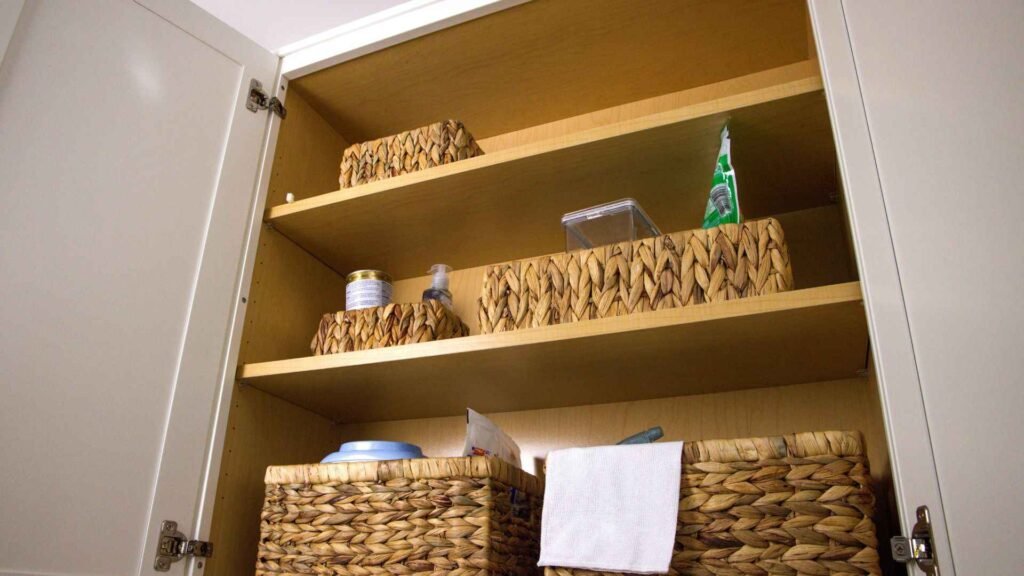
Bins and baskets can be extremely useful in a small pantry because they keep categories together.
Instead of searching through several individual packages, you can pull out one bin containing similar products.
For example, you might create:
- A snack bin
- A breakfast bin
- A baking bin
- A pasta and grains bin
- A quick-meal bin
Choose containers with handles if you plan to place them on higher shelves.
Clear bins can help you see what is inside, while solid bins may create a cleaner appearance. Both options can work well.
The most important factor is choosing bins that fit comfortably within your pantry and are easy to remove.
Avoid filling bins so completely that you have to dig through them to find what you need.
Step 7: Use Clear Containers for the Right Foods
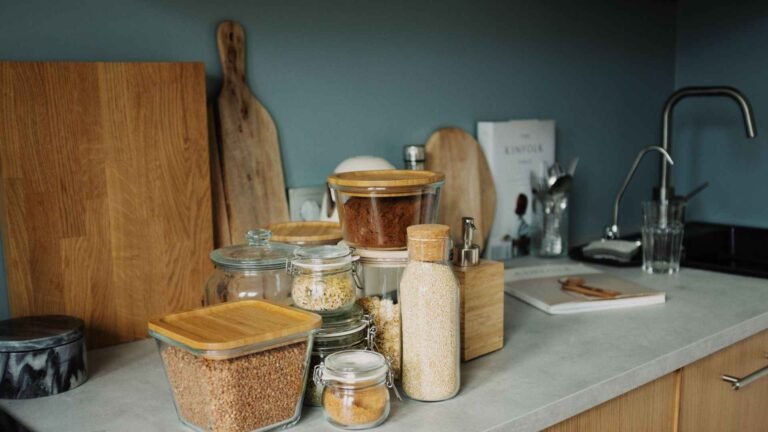
Clear containers are useful for dry foods that come in bags or bulky packaging.
They can work well for:
- Flour
- Sugar
- Rice
- Pasta
- Oats
- Cereal
- Beans
- Nuts
The biggest benefit is visibility. You can quickly see how much food remains and may be less likely to buy unnecessary duplicates.
Airtight containers may also help protect suitable dry foods from moisture and pantry pests.
Before transferring food, check the manufacturer’s storage recommendations. If you remove food from its original packaging, keep important information such as expiration dates, cooking instructions, and allergen details when needed.
For many households, a combination of containers and original packaging is the most practical solution.

Step 8: Make Better Use of Vertical Space
In a small pantry, unused vertical space can be valuable.
Look at the empty space above shorter containers or cans. Adding the right organizer can help you store more without making shelves difficult to access.
Useful options include:
- Shelf risers
- Stackable bins
- Tiered organizers
- Under-shelf baskets
- Stackable containers
Shelf risers are especially useful for canned goods, jars, and shorter items. They create multiple levels so products at the back remain easier to see.
Be careful not to stack items too high. A pantry should be easy to access safely, not simply packed as tightly as possible.
The goal is to maximize usable space while keeping everything visible and reachable.
Step 9: Make Deep Pantry Shelves Easier to Use
Deep pantry shelves can create one of the biggest organization problems. Items placed near the back are often forgotten, while newer products get placed in front of older ones.
Instead of arranging everything in long rows, use containers that allow you to access the entire shelf.
Pull-out bins and baskets work particularly well because you can slide them forward to reach items at the back.
You can organize deep shelves by category, such as:
- One bin for snacks
- One for baking supplies
- One for pasta and grains
- One for breakfast foods
- One for sauces and condiments
This prevents you from having to remove several products just to reach one item.
Another useful strategy is to keep similar products together from front to back. For example, place all canned beans in one area and all canned vegetables in another.
The main goal is to prevent food from disappearing behind other items.
Step 10: Organize Canned Goods So You Can See Everything
Cans are convenient pantry staples, but they can quickly become cluttered when stacked randomly.
Start by grouping similar canned foods together.
For example:
- Beans
- Vegetables
- Soups
- Tomatoes
- Fruit
- Broth and stock
You can arrange cans in simple rows, use shelf risers, or add a tiered can organizer.
A tiered organizer can be particularly useful in a small pantry because it allows you to see labels without moving the cans in front.
If you store multiple cans of the same product, use the first in, first out method. Place newer products behind older ones so older food is used first.
This simple habit can help reduce food waste and prevent expired products from accumulating.
Step 11: Use the Pantry Door for Extra Storage
The back of a pantry door can provide valuable storage space, especially in a narrow pantry.
An over-the-door organizer may be useful for lightweight and smaller items such as:
- Spices
- Seasoning packets
- Snacks
- Foil and plastic wrap
- Small jars
- Tea
- Coffee supplies
- Condiments
Before installing any door storage, check how much clearance you have between the door and the shelves.
A large organizer may prevent the door from closing properly if the pantry is shallow.
Avoid placing heavy glass containers or oversized products on a door organizer unless it is specifically designed to support them.
Door storage works best when used for items that are small, lightweight, and easy to grab.
Step 12: Use Lazy Susans for Awkward Spaces
Corners and deep shelves can make it difficult to reach smaller items.
A Lazy Susan, or rotating turntable, can help make these areas more accessible.
They work well for:
- Cooking oils
- Vinegars
- Sauces
- Small jars
- Condiments
- Baking extracts
Instead of reaching behind several bottles, you can rotate the organizer to bring items forward.
Choose a sturdy turntable with raised edges if you plan to store bottles or jars.
Lazy Susans are especially useful when you have several small products that would otherwise get lost behind larger items.
Step 13: Create a Simple System for Spices
Spices can take up a surprising amount of space.
If your pantry stores spices, avoid placing small jars randomly across several shelves. Keep them together in one clearly defined area.
Depending on your space, you might use:
- A small shelf organizer
- A pull-out spice rack
- A door-mounted rack
- A shallow bin
- A drawer organizer
Keep frequently used spices in the easiest-to-reach location.
Less frequently used spices can be stored together in a separate container.
Try to avoid buying duplicate spices by checking what you already have before shopping.
If you transfer spices into matching jars, label them clearly. A beautiful pantry is not very functional if you cannot quickly identify what is inside.
Step 14: Label Categories Clearly
Labels can make a pantry much easier to maintain, especially when multiple people use the space.
You do not need elaborate labels or expensive equipment.
Simple category labels can be enough.
Examples include:
- Snacks
- Breakfast
- Pasta
- Baking
- Canned Goods
- Quick Meals
- Coffee & Tea
Labels are particularly useful for bins because they remind everyone where items should be returned.
If you transfer food into containers, label the contents clearly. You may also want to note the expiration date or other important information from the original packaging.
The purpose of labeling is not decoration. It is to make the organization system easier to understand and maintain.
Step 15: Follow the First In, First Out Method
One of the simplest ways to maintain an organized pantry is to rotate food when putting away groceries.
The basic principle is simple: use older items before newer ones.
When you bring home new groceries:
- Move older products toward the front.
- Place newer products behind them.
- Check for items approaching their expiration or best-by date.
- Plan meals around foods that need to be used soon.
This system is particularly useful for:
- Canned goods
- Pasta
- Rice
- Breakfast foods
- Packaged snacks
- Baking ingredients
You do not need to check every item every week. Simply rotating products during grocery restocking can make a significant difference.

A Practical Small Pantry Layout
There is no single perfect pantry layout, but this simple arrangement works well for many small spaces.
| Pantry Area | What to Store |
|---|---|
| Top shelf | Backup supplies, seasonal foods, rarely used items |
| Upper shelves | Baking ingredients and specialty products |
| Eye-level shelves | Everyday food, snacks, cereal, pasta, and cooking staples |
| Lower shelves | Heavy containers, bulk products, and large bottles |
| Floor space | Large items and sturdy storage containers |
| Pantry door | Lightweight packets, spices, wraps, and small items |
Adjust this layout according to your pantry’s size and your household’s habits.
For example, a family with young children may want snacks on a lower, easily accessible shelf. Someone who bakes frequently may prefer to keep baking supplies at eye level.
The best pantry layout is one that makes everyday tasks easier.
How to Organize a Small Pantry on a Budget
You do not need expensive matching containers to organize a pantry effectively.
Before buying anything, use what you already have.
Reusable storage options may include:
- Shoe-box-sized containers
- Small baskets
- Clear food containers
- Mason jars
- Plastic bins you already own
- Simple shelf risers
- Reusable baskets
You can also organize products in their original packaging by grouping them into categories.
For example, place all snack boxes inside one larger basket rather than purchasing a separate container for every product.
When shopping for organizers, focus on solving a specific problem.
If cans are difficult to see, buy a shelf riser. If food gets lost in deep shelves, consider pull-out bins. If you have unused vertical space, look for stackable organizers.
Buying storage products without a clear purpose can create more clutter rather than less.
How to Keep a Small Pantry Organized
Creating an organization system is only the first step. A pantry can quickly become messy again if there is no simple maintenance routine.
Fortunately, maintaining a small pantry does not require hours of work.
Do a Quick Weekly Reset
Spend a few minutes each week putting misplaced items back where they belong.
Straighten containers, remove empty packages, and check for spills.
A quick reset prevents small problems from becoming overwhelming.
Check Before Grocery Shopping
Before making your grocery list, take a quick look inside the pantry.
This can help prevent duplicate purchases and reduce unnecessary spending.
Avoid Overstocking
Buying in bulk can save money in some situations, but it is not always practical for a small pantry.
Only purchase large quantities when you have enough space and know you will use the products.
An overcrowded pantry is more difficult to organize and makes it easier to forget what you already own.
Keep Similar Items Together
When someone takes an item from the pantry, encourage them to return similar products to the same area.
A simple category system only works when items consistently return to their designated spaces.
Deal With Empty Packages Immediately
Empty boxes and nearly empty bags can take up valuable space.
Recycle or discard packaging as soon as it is empty instead of leaving it behind.
Common Small Pantry Organization Mistakes
Even with good intentions, some organization methods can make a small pantry harder to use.
Buying Too Many Containers
Containers should solve storage problems, not become the problem themselves.
Too many containers can waste space and make it harder to quickly put groceries away.
Organizing for Appearance Instead of Function
A pantry does not need to look like a magazine photo.
Prioritize accessibility, visibility, and ease of maintenance.
Storing Everyday Items Too High
If you use something every day, it should not require a step stool to reach.
Keep frequently used items within easy reach whenever possible.
Creating Too Many Categories
A separate container for every type of food can make the system overly complicated.
Simple categories are easier to maintain.
Ignoring Food at the Back
Deep shelves can hide food for months.
Use bins, baskets, or pull-out organizers to make the entire shelf accessible.

Final Thoughts
Knowing how to organize a small pantry is not about fitting as much food as possible into a limited space. It is about creating a simple system that helps you see what you have, find what you need, and avoid wasting food.
Start by decluttering and cleaning the pantry. Then group similar items together and organize the shelves based on how often each product is used.
Use clear containers, bins, shelf risers, door storage, and vertical space only where they genuinely improve the layout.
Remember that the best small pantry organization system should be easy to maintain. If putting groceries away becomes complicated, the pantry will eventually become cluttered again.
Keep your categories simple, place frequently used items within reach, and perform quick resets regularly. With these practical habits, even a very small pantry can become a functional and efficient part of your home.
Frequently Asked Questions
How do you organize a very small pantry?
Start by removing everything and getting rid of expired or unwanted food. Group similar items together, use bins for categories, take advantage of vertical space, and keep frequently used foods at eye level.
What is the best way to organize deep pantry shelves?
Pull-out bins, baskets, and clear containers make deep shelves easier to use. They allow you to access items at the back without removing everything in front.
Should I put all pantry food in containers?
No. Containers work best for loose or frequently used dry goods. Other foods can remain in their original packaging and be grouped together in baskets or bins.
How can I make a small pantry hold more?
Use vertical space with shelf risers and stackable containers, use the pantry door for lightweight items, and remove unnecessary or duplicate products.
How often should I reorganize my pantry?
A quick weekly reset can keep the pantry tidy. A more thorough review every few months can help you check expiration dates, remove unwanted items, and adjust your storage system.