Pantry Shelf Organization Tips: 18 Easy Ideas for a Tidy Pantry
Pantry Shelf Organization
A pantry can become difficult to use surprisingly quickly. Packages get pushed toward the back, cans disappear behind taller items, and shelves can end up filled with food that is difficult to see or reach.
Good pantry organization is not about making every shelf look perfect. It is about creating a system where you can see what you have, reach what you need, and put things back without creating another mess.
The best approach is to organize pantry shelves according to the way your household actually uses them. Frequently used foods should be easy to reach, similar items should stay together, and deep or awkward shelves should have storage solutions that improve visibility.
Quick Answer
The easiest way to organize pantry shelves is to declutter first, group similar foods together, create practical zones, and use shelf space according to how frequently each item is used.
For better results:
- Remove expired and unwanted food before organizing.
- Group similar foods into simple categories.
- Keep frequently used items within easy reach.
- Use shelf risers to make cans and short containers easier to see.
- Place loose packages in bins when they are difficult to keep organized.
- Use clear containers selectively for foods that benefit from better visibility.
- Use vertical space instead of allowing shelves to become crowded.
- Keep heavier items on lower shelves when practical.
- Leave some empty space so the system is easy to maintain.
- Create a small backstock area if your household buys food in bulk.
You do not need to buy a large collection of organizers. The goal is to make the shelves more functional, not simply more decorated.
Quick Comparison
| Pantry Organization Solution | Best For | Main Benefit | Potential Drawback |
|---|---|---|---|
| Shelf risers | Cans and short items | Improves visibility | Takes up some vertical space |
| Storage bins | Loose packages | Keeps categories together | Can become cluttered if overfilled |
| Clear containers | Dry staples | Easy visibility | Requires transferring food |
| Lazy Susan | Bottles and small items | Easy access to items at the back | Uses valuable shelf space |
| Labels | Shared or large pantries | Makes categories easier to identify | Not necessary for every container |
| Vertical organizers | Baking sheets and similar items | Uses vertical space | Works best for suitable items |
| Door storage | Small/light items | Adds storage space | Door must support the organizer |
| Backstock bin | Bulk purchases | Keeps extras out of active zones | Requires inventory management |
1. Empty and Clean the Pantry Shelves First
Before buying containers or rearranging food, take everything off the shelves.
This gives you a clear view of how much food you actually have and reveals items that have been pushed to the back.
As you remove everything, check:
- Expiration or best-before dates
- Open packages
- Duplicate products
- Damaged packaging
- Food your household no longer uses
Set aside anything that needs to be discarded according to local food-safety guidance.
Once the shelves are empty, wipe them down and allow them to dry before putting food back.
Starting with a completely clear pantry also prevents you from designing an organization system around food you do not actually need.
2. Declutter Before Buying Organizers
One of the most common pantry-organization mistakes is buying storage products before deciding what needs to be stored.
If you have too much food, adding more bins will not solve the underlying problem.
Instead, first determine what you regularly use.
For example, if your pantry contains several half-used bags of the same type of food, consider whether you really need all of them. Likewise, if a product has been sitting untouched for months, it may not deserve valuable shelf space.
Once you have reduced unnecessary items, you can see which storage solutions would genuinely help.
3. Group Similar Foods Together
Create simple categories instead of organizing every individual product separately.
Depending on what your household eats, you might create zones for:
- Canned foods
- Pasta and grains
- Baking ingredients
- Breakfast foods
- Snacks
- Sauces and condiments
- Spices
- Cooking ingredients
- Drinks
- Pet food
- Backstock
The exact categories do not matter as much as consistency.
If pasta is always stored in one area, for example, everyone in the household knows where to find it and where to return it.
Avoid creating too many categories. A pantry with dozens of tiny sections can become harder to maintain than a pantry with a handful of broad, logical zones.

4. Put Frequently Used Foods Where You Can Reach Them
Your pantry shelves should reflect how often you use different foods.
Keep everyday items in the easiest-to-reach areas, usually around eye or waist level depending on the pantry layout.
Less frequently used items can go higher or farther back.
For example:
Easy-access shelves:
- Breakfast foods
- Everyday snacks
- Common cooking ingredients
- Frequently used canned foods
Higher shelves:
- Occasional baking supplies
- Specialty ingredients
- Infrequently used items
Lower shelves:
- Larger packages
- Heavier items
- Bulk supplies
This simple arrangement can make a pantry feel much more organized without adding any storage products.
5. Use Shelf Risers to Improve Visibility
Cans and small containers can create a common pantry problem: items at the back disappear behind items at the front.
A shelf riser creates different levels, allowing shorter products to remain visible.
They can be particularly useful for:
- Canned vegetables
- Soup cans
- Small jars
- Condiments
- Short boxes
- Spice containers
The important thing is not to fill every available inch. If a riser is packed too tightly, you may simply create another difficult-to-access shelf.
Leave enough room to remove items comfortably.
6. Use Bins for Loose Packages
Bags and flexible food packages can quickly make pantry shelves look messy because they do not stack consistently.
A simple bin can turn several loose packages into one manageable category.
For example, you could use separate bins for:
- Snack bars
- Chips and crackers
- Pasta packets
- Baking supplies
- Kids’ snacks
Bins work best when they are used to solve a specific problem.
Avoid buying a large collection of identical bins simply because they look attractive. Measure your shelves first and choose storage that fits the space you actually have.
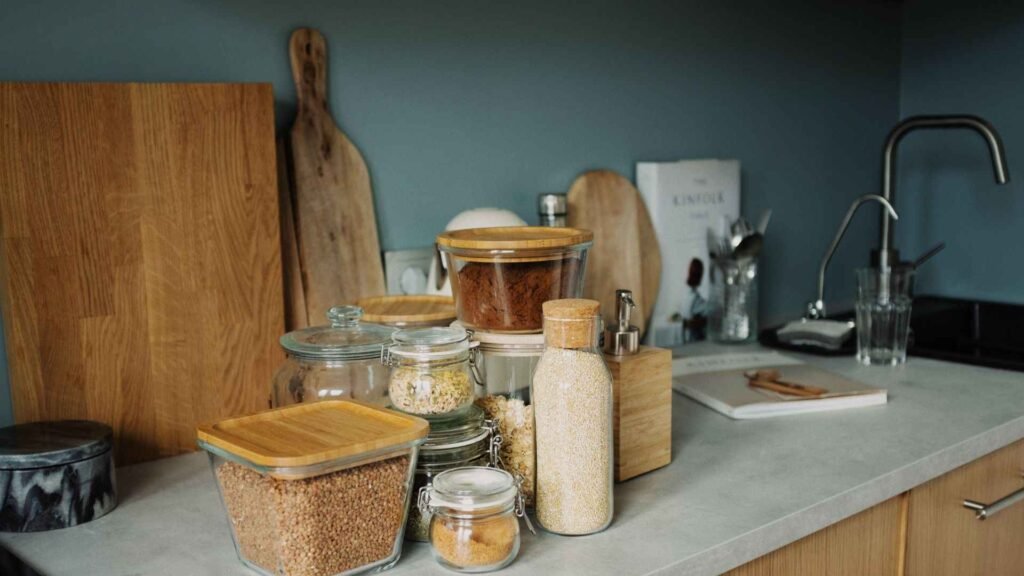
7. Use Clear Containers Selectively
Clear containers can make pantry staples easier to identify and can create a more consistent appearance.
They can be useful for foods such as:
- Rice
- Pasta
- Flour
- Sugar
- Oats
- Cereal
- Other frequently used dry goods
But you do not need to transfer everything into containers.
If a food already comes in practical packaging that is easy to store, leaving it in its original package may be simpler.
Decanting should improve your pantry’s function—not create additional work.
8. Make Deep Shelves Easier to Use
Deep shelves can provide plenty of storage space but often create a visibility problem.
When items are placed several rows deep, food at the back can easily be forgotten.
To make deep shelves more practical:
- Keep similar foods together.
- Avoid placing too many rows in front of one another.
- Use bins that can be pulled forward.
- Consider a turntable for suitable bottles or jars.
- Keep frequently used products toward the front.
- Reserve the back for less frequently used items when practical.
The goal is to avoid creating a pantry where you have to remove six things just to reach the item you actually want.
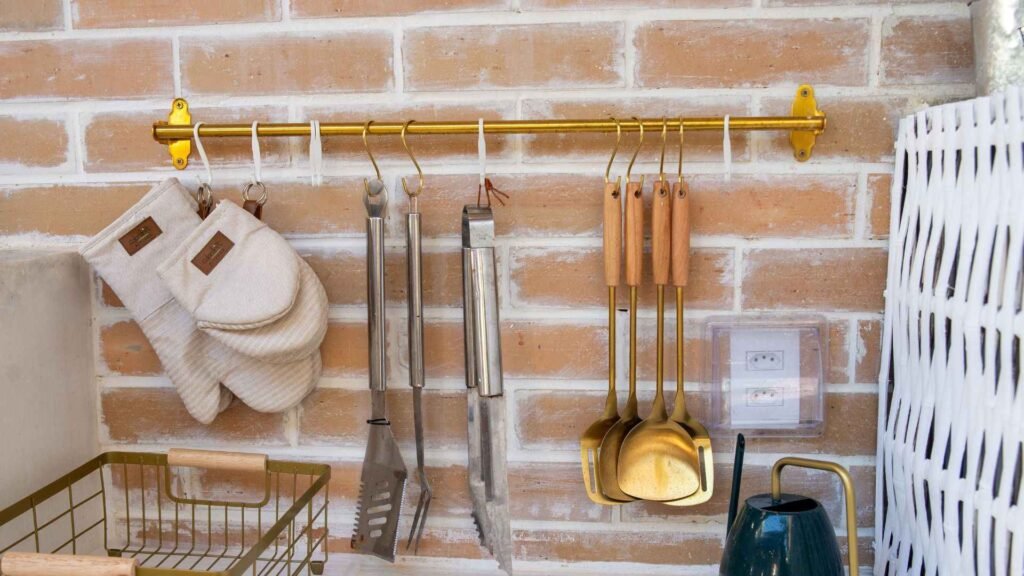
9. Use Vertical Space
When pantry shelves are crowded horizontally, look upward.
Vertical organizers, stackable containers, shelf risers, and appropriately sized bins can help you use unused space above shorter products.
However, avoid stacking items so high that they become unstable or difficult to reach.
Good organization should make the pantry easier to use, not force you to climb or move several containers every time you need something.
10. Create a Backstock Area for Extra Supplies
If you regularly buy food in bulk, do not mix every extra package with the items you are currently using.
Create a small backstock zone instead.
For example, if you have several unopened boxes of pasta, cereal, or canned goods, keep the extras together in one clearly defined area. Move them into your everyday storage area only when needed.
This prevents active shelves from becoming overcrowded and makes it easier to see what needs replacing.
It can also reduce accidental duplicate purchases because you can quickly check your available supply before going shopping.
11. Create a Kid-Friendly Snack Zone
If children regularly get their own snacks, consider giving them a dedicated pantry section.
Keep suitable foods at a height they can safely access, such as:
- Snack bars
- Crackers
- Individually packaged snacks
- Cereal
- Other household-approved foods
Use a small bin to keep the area contained.
This has two advantages: children can find their snacks more easily, and they are less likely to search through several pantry shelves and disturb everything else.
Keep items that require adult supervision or have specific storage requirements in an appropriate location.
12. Use the Pantry Door When Appropriate
The inside of a pantry door can provide useful extra storage space, particularly in smaller pantries.
Depending on the door and organizer, it can be useful for relatively small and lightweight items such as:
- Spices
- Small packets
- Sauces
- Wraps
- Frequently used pantry accessories
Before adding a door organizer, make sure there is enough clearance for the door to close properly and that the organizer is suitable for the door.
Do not overload it with heavy items simply to create additional storage.
13. Organize Shelves According to Height
Different pantry items work better at different shelf heights.
A simple arrangement might look like this:
Top shelves:
Less frequently used or lightweight items.
Middle shelves:
Everyday foods and ingredients.
Lower shelves:
Heavy containers, bulk purchases, and larger packages.
This arrangement makes the pantry easier to navigate and can reduce the need to lift heavy items from high shelves.
If children use the pantry independently, keep appropriate items within their reach while storing unsuitable items elsewhere.
14. Don’t Overfill Your Pantry Shelves
A pantry does not need to be packed completely full to be well organized.
Leaving some open space makes it easier to:
- See what you have
- Remove items
- Put groceries away
- Clean shelves
- Notice when supplies are running low
Overfilled shelves also make it easier for products to get pushed toward the back and forgotten.
A little empty space can therefore be useful rather than wasteful.
15. Label Only When Labels Actually Help
Labels can make pantry organization easier, particularly when you use storage bins or containers.
They can be especially useful for:
- Shared household pantries
- Backstock bins
- Similar-looking ingredients
- Snack categories
- Baking supplies
But labeling every single container is not necessary.
If everyone in the household can immediately identify what’s inside a clear container, a label may add little value.
The goal is to make the pantry easier to use, not create another organizational project.
16. Arrange Items So You Can See Them
Visibility is one of the most important principles of pantry organization.
If you cannot see an item, you are more likely to forget about it.
Try to avoid hiding smaller packages behind tall containers. Use risers, bins, or different shelf positions to keep products visible.
For deep shelves, consider storing frequently used items toward the front and using pull-out bins or turntables where they genuinely improve access.
A well-organized pantry should allow you to answer “What do I have?” with a quick glance.
17. Keep Similar Items Together
Once you create your pantry zones, keep them consistent.
For example, if all baking ingredients are stored together, avoid placing flour on one shelf, sugar on another, and baking powder somewhere else unless there is a practical reason.
Keeping related foods together makes both cooking and grocery shopping easier.
It also makes it simpler to notice when a category is becoming overcrowded.
18. Use the First-In, First-Out Method
When you buy more of something you already have, place the older item toward the front and the newer item behind it when practical.
This simple approach can help prevent older pantry products from being forgotten.
It works particularly well for:
- Canned goods
- Pasta
- Cereals
- Grains
- Baking ingredients
- Packaged snacks
You do not need to rearrange the entire pantry every time you shop. Just take a few seconds to place new products appropriately.
Common Pantry Organization Mistakes
Even a well-intentioned organization system can become difficult to maintain.
Buying Organizers Before Measuring
A container that looks perfect online may not fit your shelf depth or height.
Measure the shelves before purchasing storage products.
Creating Too Many Categories
If every type of food has its own tiny section, putting groceries away can become unnecessarily complicated.
Keep categories broad and intuitive.
Stacking Everything
Stacking can save space, but excessive stacking can make items difficult to reach.
Use shelf risers or appropriate organizers when they improve access.
Putting Everything Into Containers
Decanting can look attractive, but transferring every food into containers takes time and creates additional maintenance.
Only transfer foods when it improves visibility, storage, or convenience.
Ignoring the Back of Deep Shelves
The back of a deep pantry shelf should not become a place where forgotten food accumulates.
Use bins or other solutions that allow you to access items without moving everything in front.
Making the Pantry Too Full
A completely packed pantry may technically hold more food, but it is usually harder to use.
Leave enough space for products to be removed and returned easily.
How to Keep Pantry Shelves Organized
The best pantry system is one that requires very little effort to maintain.
Once a week or whenever you put away groceries, take a few minutes to:
- Return items to their correct zones.
- Move older products toward the front.
- Remove empty packaging.
- Check for items that have been pushed to the back.
- Combine partially used items when appropriate.
- Wipe up spills promptly.
You can also do a more thorough pantry reset every few months.
During the reset, remove items from crowded shelves, check dates, clean the shelves, and adjust your organization system if your household’s needs have changed.
Frequently Asked Questions
How do I organize deep pantry shelves?
Use bins, risers, or turntables where appropriate, and avoid placing too many rows of food in front of one another. Keep frequently used items easy to reach and reserve harder-to-access areas for less frequently used products.
What should go on the highest pantry shelf?
Lightweight and less frequently used items are usually more practical for high shelves. Avoid placing heavy containers in locations where they are difficult or unsafe to remove.
Should pantry food be organized by type?
Yes. Grouping similar foods into broad categories makes items easier to find and return. Categories might include snacks, canned foods, baking ingredients, grains, breakfast foods, and cooking supplies.
Are pantry containers worth it?
They can be, especially for foods that are difficult to stack or see in their original packaging. However, you do not need containers for everything. Use them when they solve a specific storage problem.
How can I organize a small pantry?
Start by removing unnecessary items, then prioritize frequently used foods, use vertical space, and choose storage that fits the shelves. Keeping the pantry from becoming overfilled is especially important in a small space.
Final Thoughts
The most effective pantry organization system is not necessarily the one with the most containers or the most perfectly styled shelves.
Start by decluttering, grouping similar foods, and organizing shelves around how your household actually uses the pantry. Keep everyday items accessible, use vertical space intelligently, and use bins or containers only where they make storage easier.
For deep shelves, focus on visibility and access. For small pantries, focus on using available vertical and door space without overcrowding the area.
Most importantly, create a system that is simple enough for everyone in the household to maintain. When every item has a logical place, keeping pantry shelves organized becomes much easier.